FOR IMMEDIATE RELEASE
“A nice melding of ideas and food present and past, classic and new.” –Publishers Weekly
With kicked up Creole flair, America’s favorite chef celebrates the legendary Delmonico’s 110th anniversary with his newest cookbook:
EMERIL’S DELMONICO
A Restaurant with a Past
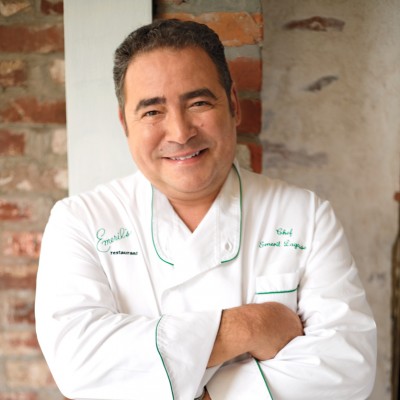
By Emeril Lagasse
In EMERIL’S DELMONICO: A Restaurant with a Past (William Morrow/An imprint of Harpercollins Publishers; On Sale October 4, 2005; ISBN: 0060740469; $29.95), Emeril pays homage to Creole cuisine by presenting a collection of classic and elegant recipes from the famed restaurant, simplified for the home cook. Emeril’s Delmonico is full of the hearty, innovative, no-frills foods that have made him America’s favorite chef. There are recipes for everything from starters, soups, and sides, to entrees, cocktails, and desserts including:
Oysters Bienville: a classic New Orleans starter made with the luscious flavors of bacon, onions, and Parmagiano-Reggianio, created as a tribute to the City’s founder.
Chicken Delmonico: a signature dish from the old restaurant, this local favorite, topped with creamy mushroom and artichoke sauce.
Bananas Foster Bread Pudding: this dessert is 100% New Orleans, from the Creole-style bread pudding, to the ultra rich caramel filling, and a la mode ice cream topping.
Café Brulot: a heavenly mixture of coffee, brandy, and spices traditionally flambéed tableside with the house lights dimmed for a dramatic effect.
More than a cookbook, Emeril’s Delmonico is part of a widespread effort to preserve a unique culinary tradition and pass it down to younger generations before it becomes extinct. Emeril provides a unique glimpse into Creole culture as he documents the history of a restaurant, its menu, and the hard-working people who made it all possible.
Beautiful full-color photographs and illustrations that capture Delmonico’s evolution throughout the years combined with moments in the restaurant’s storied history are sure to transport readers to the New Orleans of bygone days. A celebration of the past and the present, Emeril’s Delmonico is perfect for anyone looking to add a sophisticated yet simple touch to their cooking.
ABOUT THE AUTHOR
Emeril Lagasse is the chef-owner of critically acclaimed restaurants in New Orleans, including Emeril’s, NOLA, and Emeril’s Delmonico Restaurant and Bar. He is also the owner of Delmonico Steakhouse and Emeril’s New Orleans Fish House in Las Vegas, and Emeril’s in Orlando and Atlanta. Emeril is the host of Emeril Live and The Essence of Emeril as seen on the Food Network, and is the food correspondent for ABC’s Good Morning America. He is the author of Emeril’s Potluck, From Emeril’s Kitchens, Prime Time Emeril, Emeril’s TV Dinners, Every Day’s A Party, Emeril’s Creole Christmas, Louisiana Real & Rustic, and Emeril’s New New Orleans Cooking as well as two children’s books, There’s a Chef in My Soup and There’s a Chef in My Family.
The History of Delmonico
This fall, the landmark restaurant Delmonico celebrates 110 years of serving classic style Creole fare in an exceptional setting. Soon after opening in 1895, Delmonico became an acclaimed New Orleans establishment and remained in the LaFranca family until 1997 when it reopened as the award-winning, Emeril’s Delmonico. Upon taking over Delmonico’s reins, Emeril decided to re-establish the restaurant while remaining true to it Creole roots. “I wanted to keep many of the classic items from the former menu while adding inventive flavors of my own. Like the first Delmonico, I want to keep the visions alive. There was always great attention to the quality of the food, the consideration of their customers, fine wine, great art and faultless service.”
1895—Anthony Commander opens Delmonico on the corner of St. Charles Avenue and Erato Street, borrowing its name from New York’s Delmonico, that city’s most celebrated eatery in the 1880s-1890s.
1911— Anthony La Franca purchases Delmonico and runs it with the help of his wife, Marie Masset LaFranca. Delmonico is soon recognized for its exceptional French and New Orleans dishes and outstanding service.
1943—Marie takes the reins of Delmonico after her husband’s death.
1944—August Perez and Merlin McCullar, prominent local architects are hired to change Delmonico’s exterior façade and change the interior to French Provencal, to create a more formal atmosphere. During this time Marie also commissions John McGrady, the best exponent of regionalism working in the south, to paint the large oil painting, Steamboat ‘Round the Bend, depicting the dramatic race of the paddle wheelers Natchez and Robert E. Lee steaming down the Mississippi River in the 1860s to hang behind the bar.
1950s –The restaurant’s menu is revised and expanded to include such classics as Oysters Rockefeller and Oysters Bienville as well as the restaurant’s signature oyster sampler—Oysters Delmonico—topped with crab meat and melted cheese. Marie guides Delmonico into its golden years following World War II. The restaurant becomes a favorite haunt of old-line New Orleans families, local businessmen, and theatre stars such as Helen Hayes, Agnes Moorehead, and June Havoc.
1975—Marie LaFranca dies and her daughters Angie Brown and Rose Dietrich take over the business. As a result of being born and raised in the restaurant, they are well aware of the customer’s likes, dislikes, and special needs. In turn, Delmonico maintains its customer base and remains a Creole dining haven.
1995—Delmonico celebrates its one hundredth anniversary with a multi-course feast featuring signature dishes paired with wines.
1997—Rose and Marie decide it is time for the restaurant to enter a new era and close Delmonico after the last of the carnival parades on the Monday before Mardi Gras. Soon after, the sisters approach Emeril Lagasse to take over the reins of the restaurant.
1999—Emeril reopens the landmark establishment as an homage to Creole cuisine and renames it Emeril’s Delmonico. He offers a menu drawing from the restaurant’s history while offering his own Creole dishes.
2002—Emeril’s Delmonico receives the AAA Four Diamond Award, the Mobil Four Star Award, and Wine Spectator’s Best of Award of Excellence.
Q & A with Emeril Lagasse author of EMERIL’S DELMONICO
Q. How did you happen to write a book on Emeril’s Delmonico?
A. In 1997, I was approached by the owners of Delmonico to take over the reins of this legendary New Orleans business that originated in 1895. I did not want to just buy the building and the business and start a new concept. I wanted to preserve and honor the history of the restaurant and the Creole cuisine that defines the restaurant. I re-opened the restaurant in 1999 in homage to Creole cuisine. I think the preservation of Creole cuisine is important and I wanted to share this message. I did this first by re-opening the restaurant and now I have written this book.
Q. What is Creole cuisine?
A. It is one of the most incredible styles of cuisine in the world. It is a layering of flavors and a layering of cultures; from the American Indian, to the West African, to the French, to the Spanish. New Orleans has a fascinating history that began in 1718 and its cuisine has followed that journey. The city was founded by a Frenchman named Bienville and at this time the area was inhabited by Choctaw Indians; this is where file powder and corn maque choux come from. From 1718 to 1765 the city was run by the French, which is how roux became the foundation of the cuisine. One of the most important dishes of Creole cuisine is gumbo which is the African word for okra which is a staple ingredient in Creole cuisine and brought to Louisiana by the West Africans. From 1765 to 1803 the city was run by the Spanish, which brought a variation of paella called jambalaya to the city. As you can see, New Orleans was a melting pot of cultures and what came out of this was a beautiful cuisine called Creole.
Q. Why is Creole cuisine important to you?
A. When you think of New Orleans food, you are thinking of Creole cuisine. This is one of the most unique styles of food in the United States and it is indigenous to New Orleans. This is a cuisine that was passed down from generation to generation within the families of the city over the past 200 years. I want to make sure that the next generation has the information and encouragement to pass this historical cuisine down to the next generation. If this is not nurtured I feel it may get lost.
Q. How do you plan to do this?
A. I would like to work with some of the historical organizations in New Orleans that make the effort to preserve New Orleans culture and extend this to the culinary arts. I also want to approach the grammar schools and high schools in New Orleans to include culinary arts as part of their curriculum. Today kids are not eating great and it would be a tremendous life skill for them to really understand food and where it comes from. I can start in New Orleans and see where it goes from there. I also want to share with everyone the importance of your own personal culinary history and the importance of documenting this and passing it down to the next generation. Like storytelling and genealogy this is what bonds families and makes each one unique.
Q. What do you think would cause Creole cuisine to disappear?
A. I think that fast food has had a detrimental effect on our kids and our families. Over the past decade we have seen the effects of this change in our culture. We have seen a rise in childhood diabetes and obesity. The respect for food is disappearing in general because of the need for expediency. Food is not only food but it is lifestyle, it is communication, it is family and it is heritage. We need to look long and hard at this and realize what we are giving up in order to eat a little faster.
Contact: Carrie Bachman, 212-207-7463, carrie.bachman@harpercollins.com Milena Perez, 212-207-7464, milena.perez@harpercollns.com Kate Hanzalik, 212-207-7034, katherine.hanzalik@harpercollins.com
###